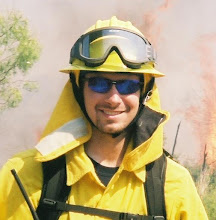
Well, it has almost been a year since my first real deployment on disaster recovery. That was Oklahoma City 2007. The new year has found me once again in the good state of Oklahoma (note that I put "good", not "great"...I think Texas only deserves that status). I put in 3 1/2 months last year, and I am hoping for the same this year.
I have already visited a few similar places, driving by the Fair Grounds and visiting a local religious gift store. The GREAT thing is that I am staying in the same GREAT hotel as last year and working in the same building. Anybody who knows me knows that I am a creature of habit. Change is BAAAAAD. There are many familiar faces at the Joint Field Office (JFO), which made me smile when I first arrived. And this go-around is for the same circumstance: winter ice storms.
Showing posts with label disaster. Show all posts
Showing posts with label disaster. Show all posts
Wednesday, January 23, 2008


Wednesday, April 4, 2007
A No-Go for Clovis
I finally found out when my deployment in Oklahoma City will be over...I think.
The Federal Coordinating Officer (FCO) got word that it will be May 11th. My girlfriend is not too happy. She is missing me sorely, and she realized that almost a whole semester has gone by since I last came to see her at her college. May 11th is long past my expectations. Things have slowed down (in the Planning section) to the point that we are finding things to do. I expected to be out of here in mid-April. Other news came in as well...the Clovis tornado damage estimates have exceeded the threshold, and it has been declared a federal disaster.
However, it is very small, consisting of only two counties so I will not be needed at that location.
The Federal Coordinating Officer (FCO) got word that it will be May 11th. My girlfriend is not too happy. She is missing me sorely, and she realized that almost a whole semester has gone by since I last came to see her at her college. May 11th is long past my expectations. Things have slowed down (in the Planning section) to the point that we are finding things to do. I expected to be out of here in mid-April. Other news came in as well...the Clovis tornado damage estimates have exceeded the threshold, and it has been declared a federal disaster.
However, it is very small, consisting of only two counties so I will not be needed at that location.
Saturday, March 31, 2007
Tornado Alley
Thursday and Friday were busy days for Texas, Oklahoma, Kansas, and Nebraska; severe weather moved along a stationary front, bringing tornadoes, flooding, and hail.
Being the unofficial weatherman at the disaster field office in an eastern suburb of Oklahoma City, my eyes were glued to radar screens, television stations, and my ears perked anytime a NOAA weather radio sounded. Much to our surprise, a tornado touched down in northwest Oklahoma City on Thursday. Being in tornado alley, you come to expect the worst, and you come prepared.
To make matters worse on Friday, my girlfriend was traveling home from school in west central Texas. Severe weather pounded the region, and multiple tornado warnings were issued for counties that she was in and counties that she was traveling through. Thank God, she made it back to San Antonio safely.
The disaster field office is still awaiting damage estimates in Clovis, New Mexico for a tornado they had earlier in the month. Maybe I'll be deployed there...or maybe I'll remain in Oklahoma for another month. Only time and damage estimates will tell.
Being the unofficial weatherman at the disaster field office in an eastern suburb of Oklahoma City, my eyes were glued to radar screens, television stations, and my ears perked anytime a NOAA weather radio sounded. Much to our surprise, a tornado touched down in northwest Oklahoma City on Thursday. Being in tornado alley, you come to expect the worst, and you come prepared.
To make matters worse on Friday, my girlfriend was traveling home from school in west central Texas. Severe weather pounded the region, and multiple tornado warnings were issued for counties that she was in and counties that she was traveling through. Thank God, she made it back to San Antonio safely.
The disaster field office is still awaiting damage estimates in Clovis, New Mexico for a tornado they had earlier in the month. Maybe I'll be deployed there...or maybe I'll remain in Oklahoma for another month. Only time and damage estimates will tell.
Tuesday, February 13, 2007
The Science of Getting Out Alive
A cold, piercing wind awaited me this February morning in Oklahoma City. Ten minutes 'til 7 o'clock, I rushed to work. The disaster recovery Joint Field Office (JFO) has been my temporary location since I arrived on January 31st in response to the ice storms. The morning e-mail from the Safety Officer intrigued me. Usually, he sends out all-hands e-mails regarding possible icy conditions on the sidewalks, or how to drive safely. This morning, he forwarded an article from Time Magazine writer Amanda Ripley, titled "How to Get Out ALIVE; From Hurricanes to 9/11: What the Science of Evacuation Reveals about How Humans Behave in Disasters" on the biological/psychological aspect of surviving a mass emergency or disaster. As I perused scientific research on human response mechanisms of disaster victims, several quotes stood out:
While it's a morbid idea and sometimes leaves you with an uneasy feeling in your stomache, fantasizing about tragedy is an essential tool for increasing your chances of getting out alive.
Fantasize (transitive verb) - to indulge in reverie : create or develop imaginative and often fantastic views or ideas.
"In the hours just before the Tenerife crash, Paul Heck didOver the past six months, my job has flown me to several work locations. They were my first flights in almost ten years. In addition, having just recently graduated with a degree in disaster management, I promptly read the safety manual on the seatback in front of me. In this article, Paul and his wife survived a fatal fire that engulfed his airplane after it was struck on the tarmac by another airplane. Most passengers on his flight had in fact, survived the crash. Most of the fatalities on his flight occurred from the fire that followed. Paul's wife recalled looking over her shoulder as she quickly exited through a hole in the wreckage. She saw her friend, sitting motionless in some sort of trance. That trance cost her friend her life.
something highly unusual. While waiting for takeoff, he studied the 747's safety
diagram."
"As we stood to evacuate, there was a loud thump. In a crowdThe article's author described her experiences at the FAA's Training Academy, after participating in an airplane emergency simulator alongside flight attendants. During times of acute stress and unfamiliar circumstances, the human mind can turn the simplest of motions into complex, confusing tasks ... unless we take the initiative and learn how to survive.
of experienced flight attendants, still someone had hit his or her head on an
overhead bin. In a new situation, with a minor amount of stress, our brains were
performing clumsily."
"If we know that training--or even mental reheaersal--vastlyPolice S.W.A.T. team members will tell you how they "fantasize" about a dozen varieties of situations they encounter. They mentally go through department guidelines, their movements, the conditions they might face, and the possible outcomes. This helps them prepare for any situation and helps ensure that when the moment of truth comes, they won't hesitate or be dumbfounded by an unexpected occurrence. Being a wildland firefighter, I have found myself fantasizing about situations I might come across on the fireline. I take mental note of escape routes and fire shelter deployment zones. I think through every action I must take to properly deploy the shelter and I attempt to fathom the extreme conditions I will face beneath the shelter as a fire passes over me.
improves people's responses to disasters, it is surprising how little of it we
do."
While it's a morbid idea and sometimes leaves you with an uneasy feeling in your stomache, fantasizing about tragedy is an essential tool for increasing your chances of getting out alive.
Fantasize (transitive verb) - to indulge in reverie : create or develop imaginative and often fantastic views or ideas.
Subscribe to:
Posts (Atom)